🔬 Scientific Background
The human body operates on a circadian rhythm, a roughly 24-hour internal clock regulated by the suprachiasmatic nucleus (SCN) in the brain, which controls the release of hormones such as melatonin and cortisol, regulates metabolism, immune function, and brain repair processes.
When you stay up late and shift your sleep cycle:
You disrupt melatonin secretion. Growth hormone secretion (important for cell repair) may be impaired. Cortisol patterns become abnormal, increasing stress on the body.
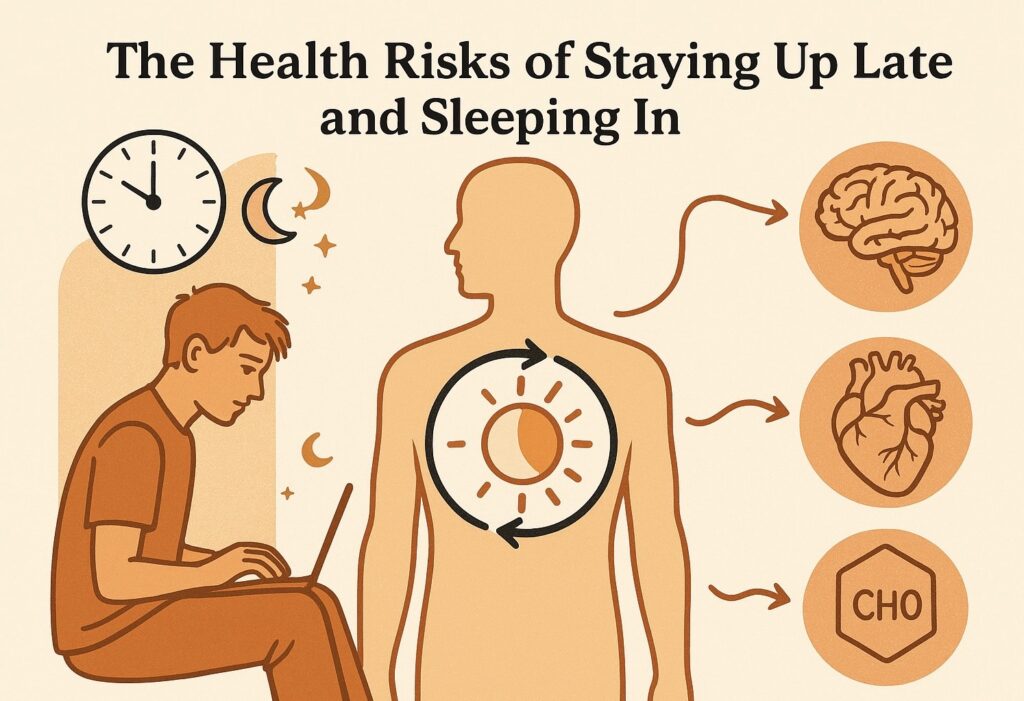
1️⃣ Staying up late: consequences
Circadian rhythm misalignment Poor quality of sleep stages (especially slow-wave sleep and REM sleep) Impaired glucose metabolism → ↑ risk of diabetes type 2 Disrupted lipid metabolism → ↑ risk of cardiovascular disease Mood disorders: higher risk of depression and anxiety Cognitive impairment: memory, attention, executive function
📖 Supporting studies:
Wang et al. (2015), Sleep Medicine Reviews: Chronic circadian disruption contributes to metabolic disorders. Depner et al. (2019), Current Biology: Inadequate sleep duration combined with circadian misalignment increases insulin resistance. Walker (2017), Why We Sleep: Highlights impacts on memory consolidation and immune suppression due to sleep debt.
2️⃣ Sleeping in to compensate: limited benefit
May help reduce acute sleep deprivation but does not fully reset the biological clock. Circadian misalignment remains. Chronic irregular sleep patterns have cumulative effects.
📖 Supporting studies:
Wittmann et al. (2006), Chronobiology International: “Social jetlag” — misalignment between biological clock and social schedules — is linked to obesity and metabolic disorders. Zhang et al. (2017), Sleep Health: Weekend catch-up sleep only partially reverses the effects of insufficient weekday sleep.
3️⃣ Long-term risks of repeated pattern
Sleep debt accumulation Impaired cognitive performance Suppressed immune function Higher risk for obesity, diabetes, cardiovascular disease Increased mental health disorders
⚠ Exception: occasional late nights
If you occasionally stay up late (once or twice a month), and promptly return to a normal schedule, your body may recover reasonably well.