Dietitian:
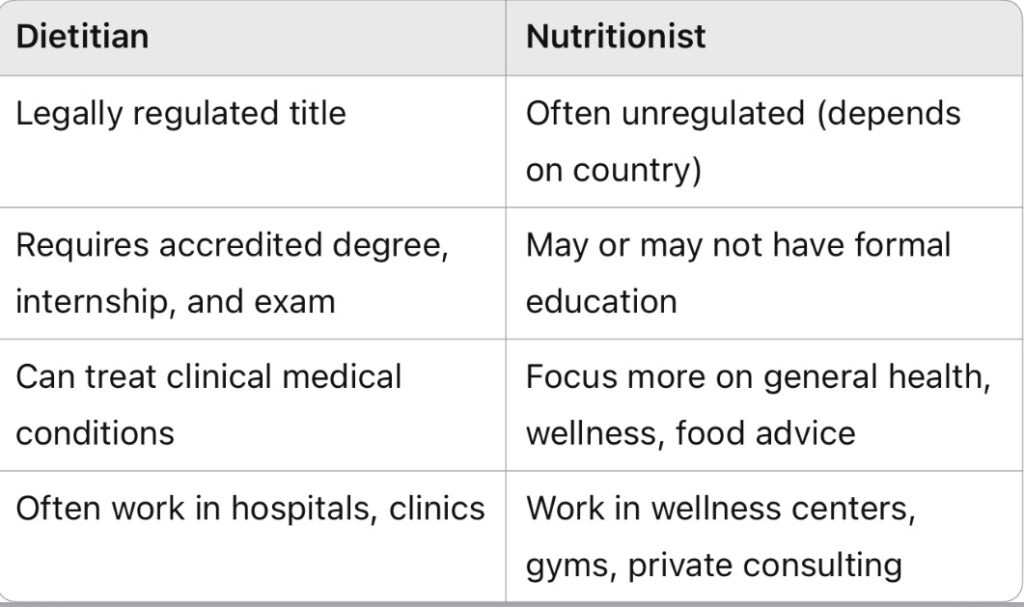
A dietitian is a licensed health professional who has completed accredited education, supervised practice, and passed a national exam (like the RD — Registered Dietitian). They are legally allowed to diagnose and treat nutrition-related medical issues (like diabetes, kidney disease, eating disorders). In many countries, the title “dietitian” is protected by law.
Nutritionist:
A nutritionist is a broader term that anyone can use in many places — even without formal training. Some nutritionists do have degrees and certifications, but others may not. In countries like the U.S., “nutritionist” is not a legally regulated title (except in specific cases like “Certified Nutrition Specialist” — CNS — which requires a high level of education).
See a Dietitian when you:
Have a medical condition that needs special diet management (like diabetes, kidney disease, cancer, food allergies, eating disorders) Need a doctor’s referral for nutrition therapy Are in a hospital, rehab center, or clinic needing specialized nutrition support (like tube feeding)
Example:
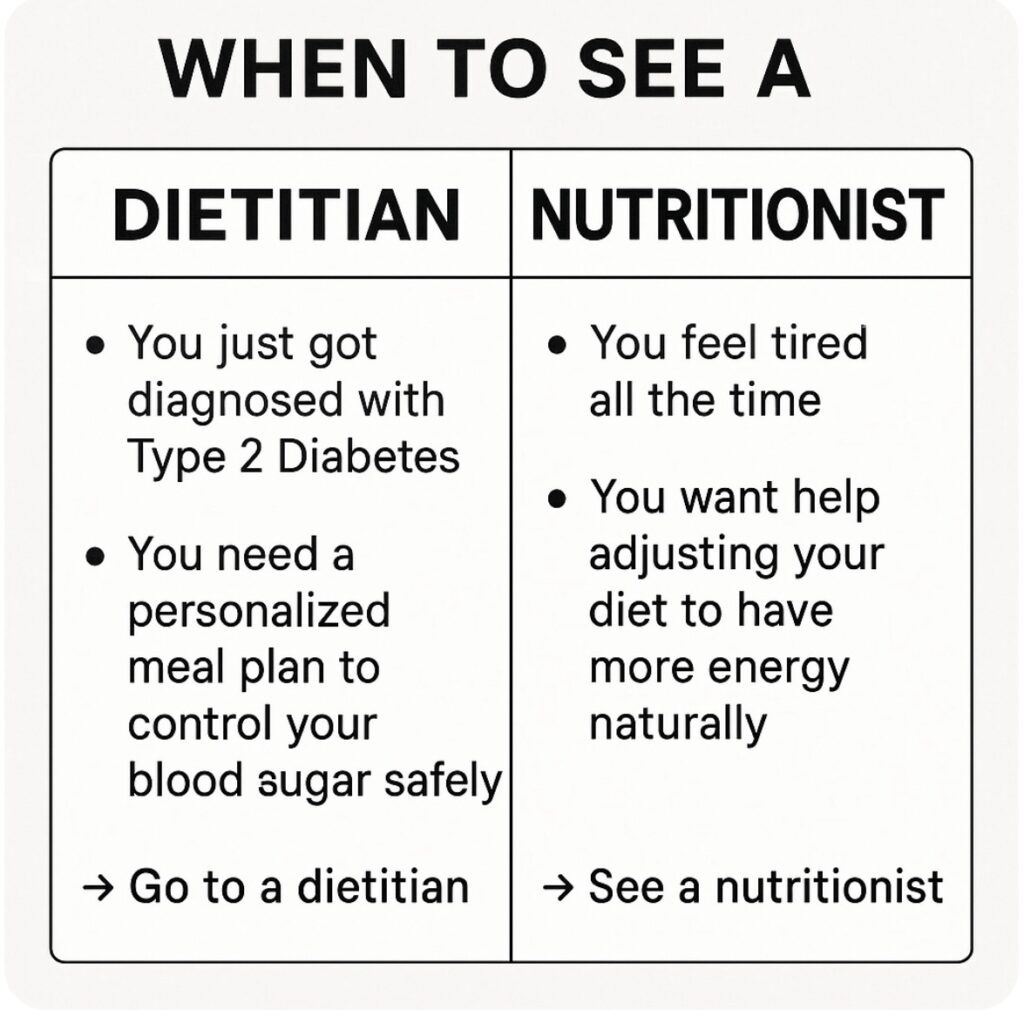
You just got diagnosed with Type 2 Diabetes. You need a personalized meal plan to control your blood sugar safely. → Go to a dietitian.

See a Nutritionist when you:
Want to improve general health (lose weight, eat healthier, boost energy) Need basic nutrition advice (meal planning, grocery shopping help, learning about vitamins) Are generally healthy but want to fine-tune your diet for fitness or wellness goals
Example:
You feel tired all the time and want help adjusting your diet to have more energy naturally. → See a nutritionist.
QUICK COMPARISON